七、阅读短文,回答问题(10分)
Chinese people have always valued honesty. Many stories throughout history show us the importance of this virtue (美德). Let's take a look at two of them.
The first story is about Ji Bu, a general (将军) in the Western Han Dynasty. Whenever Ji made a promise (诺言), he would do everything he could to keep it. People respected his honesty, and a saying spread, “It is better to have a promise from Ji Bu than to get lots of gold.” Later, the saying turned into, “A promise is worth lots of gold.” Even today, we still use
it to describe (形容) an honest person.
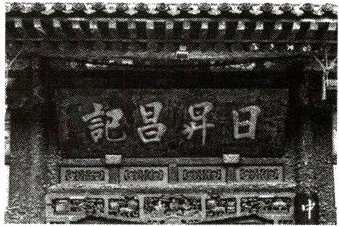
The other story is from the Qing Dynasty. There was a businessman named Li Daquan. At that time, people mainly used gold, silver (银) and copper (铜) as money. It was all heavy. Carrying a lot of money was also dangerous because others might rob (抢劫) them. One day, a friend suggested that Li set up bank branches (分行) and use drafts (汇票). When people put their money in one branch, they would get a draft. They could then use the draft to get their money back from other branches.
Li liked the idea and acted quickly. Words soon spread. Li's honesty in running his bank brought him many customers (顾客). His bank, called Rishengchang, grew to thirty-five branches across the country. As China's first modern bank, it paved (铺设) the way for the banking system in the country.
1. When did the first story happen?
In the Western Han Dynasty.
2. What does the underlined word “it” in the passage refer to (指代)?
The saying “A promise is worth lots of gold.”
3. In the second story, what were the advantages (优点) of using drafts?
They were light/easy and safe to carry.
4. What does the passage mainly talk about?
The importance of being honest/honesty.
5. What will you do if you can't keep a promise?
I will say sorry and tell the truth to others.
解析:
【分析】做本题时,先通读全文把握主旨,再针对每个问题回到原文定位对应信息:第1题查找第一个故事发生的时间,第2题分析代词it的指代内容,第3题梳理汇票的优点,第4题归纳文章主旨,第5题结合诚信主题作答。
【解析】1. 定位到原文第二段第一句“The first story is about Ji Bu, a general (将军) in the Western Han Dynasty.”,可知第一个故事发生在西汉,故答案为In the Western Han Dynasty. 2. 前文提到“Later, the saying turned into, “A promise is worth lots of gold.” Even today, we still use it...”,由此可知it指代该谚语,故答案为The saying “A promise is worth lots of gold.” 3. 原文第三段提到原来的货币“all heavy”且“Carrying a lot of money was also dangerous”,汇票解决了这两个问题,故优点为They were light/easy and safe to carry. 4. 全文通过两个关于诚信的故事,阐述了诚信的重要性,故主旨为The importance of being honest/honesty. 5. 结合诚信主题,若不能遵守承诺,应道歉并告知真相,故答案为I will say sorry and tell the truth to others.
【答案】1. In the Western Han Dynasty.
2. The saying “A promise is worth lots of gold.”
3. They were light/easy and safe to carry.
4. The importance of being honest/honesty.
5. I will say sorry and tell the truth to others.
【知识点】阅读理解、细节理解、主旨大意
【点评】本文以两个历史故事为载体,考查学生对英语阅读信息的定位、理解与归纳能力,涵盖细节查找、指代判断、主旨提炼及开放应用,贴合诚信主题,难度适中。
【难度系数】0.7