三、语法填空
Have you ever been to the Palace Museum? Have you noticed that there's a Chinese pingfeng in each palace?
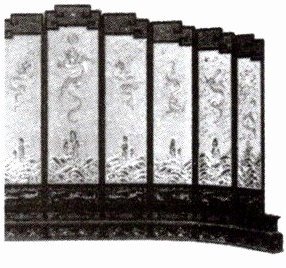
The Chinese pingfeng is one of the ancient Chinese art 1. ______ (form) and traditional Chinese furniture(家具). It dates from the Han Dynasty. The term pingfeng means protection from wind, showing its purpose(目的)in the very 2. ______ (begin).
As time passes by, it has been made into different sizes with 3.
(colour) paintings. There's often a dragon on pingfeng. It stands for nobility(高贵). The crane(仙鹤) can be seen on pingfeng too. It 4.
(express) the wish for a long life. Beautiful flowers are also a popular design of pingfeng. In the past, it took the craftspeople months or even years 5.
(finish) a Chinese pingfeng. Now people can make one more
6.
(quick).
Behind pingfeng 7.
(lie) a story. In the past, the unmarried(未婚的) daughter of a rich family should not see or be seen by men except(除了)her families and close relatives. If a man paid a visit, she might take a secret(暗中进行的)look at him behind the pingfeng. Her father would talk about poems with the young man and ask him to write one. If the father were happy with the young man's poem and his looks, he might agree 8.
(let) his daughter marry(嫁)the young man.
Today pingfeng is back in fashion for its 9.
(beautiful) and practical use as furniture. Acting as a moving wall or divider(间隔物), it can be the perfect match for modern sofas and walls. If you 10.
(design) your house now, I recommend a Chinese pingfeng.
解析:
【分析】
这道语法填空以中国传统屏风为主题,所有空格均给出提示词,解题时我们可以按照“先判断空格所需词性/语法属性,再结合固定搭配、时态规则、主谓一致等语法要求变形”的思路逐个推导:
1. 遇到one of结构立刻反应后面要接可数名词复数;
2. 看到介词in和定冠词the,后面需要接名词构成固定短语;
3. 空格后是名词,优先考虑用形容词修饰名词;
4. 主语是第三人称单数,描述客观事实用一般现在时,谓语要变形为三单形式;
5. 遇到it作形式主语的结构,回忆固定句型it takes sb +时间+to do sth;
6. 空格修饰动词,要使用副词形式;
7. 倒装句主语在谓语之后,判断主语单复数确定谓语形式;
8. 遇到动词agree,回忆固定搭配agree to do sth;
9. 形容词性物主代词its后面需要接名词;
10. 句中now提示动作正在进行,条件状语从句用现在进行时表达当下正在发生的动作。
【解析】
1. 空格前是one of,意为“…之一”,后面必须接可数名词的复数形式,form的复数是forms,故填forms。
2. 固定短语in the beginning意为“起初,最开始”,需要把动词begin变为名词形式beginning,故填beginning。
3. 空格后是名词paintings,需要用形容词作定语修饰名词,colour的形容词形式是colourful,意为“色彩丰富的”,故填colourful。
4. 句子描述客观事实,用一般现在时,主语It是第三人称单数,谓语动词要变为第三人称单数形式expresses,故填expresses。
5. 此处是固定句型It takes sb some time to do sth,意为“做某事花费某人多长时间”,需要用不定式作真正的主语,故填to finish。
6. 空格修饰动词make,需要用副词形式,quick的副词是quickly,意为“快速地”,故填quickly。
7. 本句是完全倒装结构,真正的主语是后面的a story,为单数,描述客观情况用一般现在时,谓语动词用第三人称单数lies,故填lies。
8. 固定搭配agree to do sth意为“同意做某事”,后面接不定式,故填to let。
9. 空格前是形容词性物主代词its,后面需要接名词,beautiful的名词形式是beauty,意为“美感”,故填beauty。
10. 句中时间状语now提示动作正在发生,条件状语从句主语是you,现在进行时结构为are + doing,故填are designing。
【答案】
1. forms 2. beginning 3. colourful 4. expresses 5. to finish
6. quickly 7. lies 8. to let 9. beauty 10. are designing
【知识点】
词性转换,固定搭配,时态与主谓一致
【点评】
本题选取中国传统屏风作为语料,将传统文化知识和初中核心语法考点结合,所有空格均给出提示词,考点覆盖名词复数、词类转换、非谓语动词、时态等基础语法点,仅倒装句的设置有小门槛,整体能有效考察学生的基础语法应用能力,同时帮助学生了解传统家具文化。
【难度系数】
0.7