七、(跨学科融合) 还原短文6选5(共5小题;每小题2分,满分10分)
Everybody knows that there are usually four seasons in a year. 71.
D
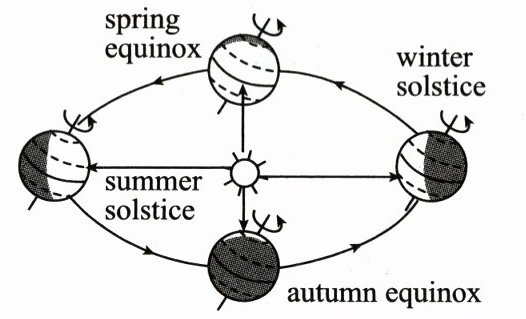
As our planet moves around the sun, the light from the sun falls on the earth from different directions. This helps create the seasons. At different times of the year, there is more sunlight in some places and less sunlight in others. More sunlight means longer days and warmer weather. 72.
A
It gets colder in autumn and winter because the days are shorter, and we get less light from the sun.
The seasons fall at different times of the year around the world. For example, China is located to the north of the equator(赤道). Here, we experience summer from June to August. 73.
F
In Australia, it is summer from December to February, and Australians have their spring when we have our autumn.
74.
E
The hottest and the coldest parts of the world usually have only two seasons. It is always hot in places close to the equator. These places are called the tropics(热带地区). Instead of our four seasons, many parts of the tropics have two periods—the rainy season and the dry season. 75.
C
Around the North and South Poles, there are only two seasons, too—a very, very cold winter and a somewhat less cold summer.
A. This is why we have spring and summer.
B. This is because spring and summer are long.
C. People will never experience winter in these areas.
D. But do you know how the four seasons are formed?
E. Not all places in the world have four seasons like ours.
F. To the south of the equator, June, July and August are winter months.