六、(广东深圳市期末)阅读材料,选择正确的答案。
The natural world is our home—rivers, forests, oceans and animals all live together. We often do small things without thinking, but these habits can hurt the environment. Let's look at these “hidden harms(隐藏伤害)” and learn why we need to change them.
| Forgetting reusable bags | Many people still use plastic bags when shopping, even though reusable bags are easy to carry. Every year, billions of plastic bags end up in forests and oceans. Animals often mistake(把……错当成) them for food and eat them, which can kill them. Plastic bags take over 100 years to degrade(降解)—they stay in the natural world, polluting soil and water. |
| Wasting water | Leaving the tap running while brushing teeth or taking long showers—these small acts waste tons of water every day. Fresh water(淡水) is very important. Over time, water waste makes
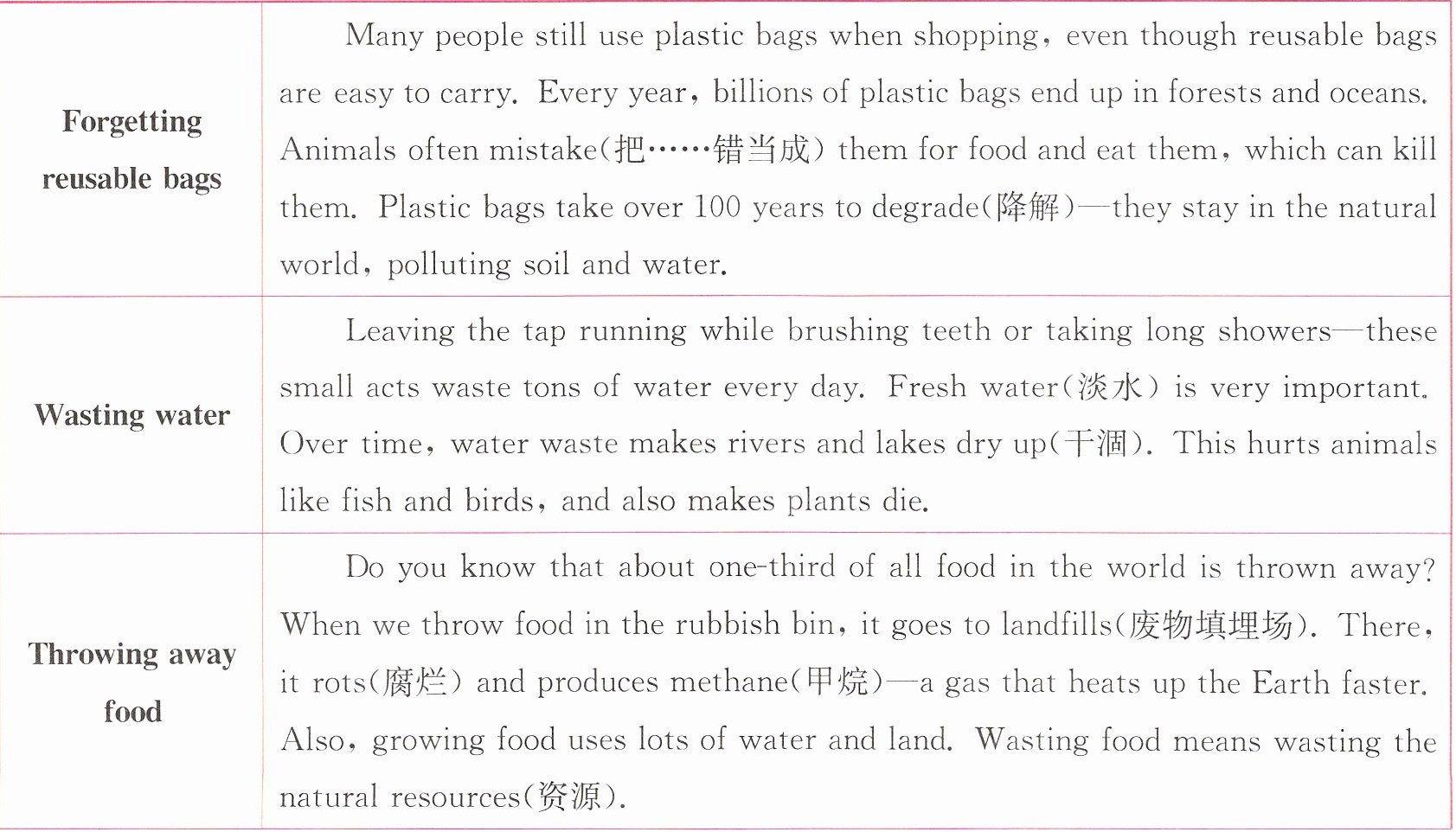
rivers and lakes dry up(干涸). This hurts animals like fish and birds, and also makes plants die. |
| Throwing away food | Do you know that about one-third of all food in the world is thrown away? When we throw food in the rubbish bin, it goes to landfills(废物填埋场). There, it rots(腐烂) and produces methane(甲烷)—a gas that heats up the Earth faster. Also, growing food uses lots of water and land. Wasting food means wasting the natural resources(资源). |
续表
| Using many disposable items | Disposable chopsticks and plastic straws are convenient(方便的), but they harm nature. Making disposable chopsticks requires cutting down trees—each year, millions of trees are cut down. Plastic straws often end up in oceans, hurting sea animals that get tangled(缠绕) in them. These items are used for a few minutes but stay in the environment for years. |
| Littering small rubbish | A plastic bottle cap(瓶盖) or a piece of paper—many people throw these kinds of rubbish on the ground. Over time, the rubbish piles up in parks, forests and rivers. It will make the city messy and dirty. |
Small habits can cause big harm, but small changes can also help! Bring reusable bags, turn off the tap when not using water, eat up your food, use reusable items and throw rubbish in bins. Let's protect our only home.
(
C
)1. Why are plastic bags harmful to animals?
A. Animals can't see them in the water.
B. Plastic bags make animals feel cold.
C. Animals mistake them for food and eat them.
(
A
)2. What happens when food rots in landfills?
A. It produces methane, which heats up the Earth.
B. It turns into fresh water for plants.
C. It helps animals find more food.
(
C
)3. What do we need to make disposable chopsticks?
A. Lots of water from rivers.
B. Plastic from factories.
C. Trees that are cut down.
(
C
)4. Which of the following is a “hidden harm” to the natural world?
A. Planting trees in parks.
B. Using a reusable water bottle.
C. Throwing a plastic bottle cap on the ground.
(
C
)5. How can we help protect the natural world?
A. Take long showers every day.
B. Throw food we don't like in the bin.
C. Bring reusable bags when shopping.