四、阅读表达。
新素材 人文地理 Mingyue Village welcomes 25 foreign students of the 2025 "Sing and learn Chinese—Singing in Chengdu" Study Tour.
The village is situated in Pujiang, and regarded as one of the "Top Ten Model Villages" for high-quality rural industrial development. The village has over $5,000,000\ \mathrm{m}^2$ of Lei bamboo and $2,000,000\ \mathrm{m}^2$ of tea plants. Visitors can have a view of natural beauty and take part in activities such as picking tea leaves.
Here, the fascination lies not only in its clear waters and green mountains, but also its intangible cultural heritage.
On arrival, foreign students from 18 different countries excitedly follow local artists to experience reed weaving. An artist introduces a local reed—Pu Cao, from which Pujiang takes its name.
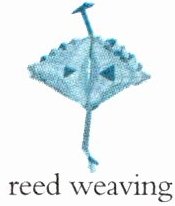
"Very interesting! I've gradually learnt a lot of things about Chinese culture through experiences like this. I'll take them back to my country and show them to my friends," says Bayasta from Kyrgyzstan.
Then a local artist instructs them in tie-dyeing. The dye(染料) is made from banlangen leaves. Banlangen is used not only for medical purposes, but also as a natural dye. She tells students if reed weaving "turns grass into treasures", tie-dyeing "turns leaves into gold".
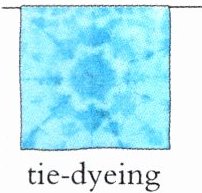
Zhou Yuchen, an American student, says, "Tie-dyeing dates back over 2, 000 years in China and was spread along the Silk Road. This craft caught Western people's attention and became fashionable as a symbol of peace and freedom during the 1960s. Many US schools introduce tie-dyeing in Art classes. Students love its hands-on process and surprising results."
The foreign youth experience the intangible cultural heritage of the Chinese countryside and feel the energy that green development brings to the ancient village. Clear waters and green mountains are valuable treasures.
1. What does the name of Pujiang come from?
2. How does Bayasta like reed weaving?
3. When did tie-dyeing become fashionable in the West?
4. Why does the local artist think tie-dyeing "turns leaves into gold"?
5. 新考法 开放性设问 Do you agree with the idea of green development in Mingyue Village? Why or why not?
解析:
【分析】
做这篇阅读表达题时,首先要遵循“题干定位-原文找依据-整理输出答案”的思路:1. 对于细节类题目,先划出题干中的核心关键词,带着关键词回到原文精准定位对应的语句,直接提取或稍加整理就能得到答案;2. 对于需要整合信息的题目,要把前后关联的原文内容结合起来,梳理逻辑后组织通顺的表述;3. 开放性设问要先明确表态,再结合文章提到的生态保护、非遗传承、乡村经济发展等相关内容给出合理理由,做到言之有据。
【解析】
1. 定位题干关键词"the name of Pujiang come from",找到原文第四段最后一句"An artist introduces a local reed—Pu Cao, from which Pujiang takes its name.",直接提取信息即可得到答案。
2. 定位题干关键词"Bayasta"和"like reed weaving",找到原文第五段Bayasta的发言开头"Very interesting!",整理成符合问题的完整表述即可。
3. 定位题干关键词"tie-dyeing"和"become fashionable in the West",找到原文倒数第二段"This craft caught Western people's attention and became fashionable as a symbol of peace and freedom during the 1960s.",直接提取时间信息即可。
4. 结合上下文分析,首先原文提到扎染的染料是板蓝根叶子制成的天然染料,原本普通的叶子经过扎染工艺变成了有价值的非遗文创产品,既创造了经济价值,又传承了非遗,所以说“点叶成金”,整合相关内容即可得到答案。
5. 本题为开放性设问,首先明确表态,再结合文中明月村兼顾生态保护、非遗传承、带动乡村经济发展的绿色发展优势阐述理由,表述通顺、言之有理即可。
【答案】
1. From a local reed called Pu Cao.
2. Bayasta thinks it's very interesting.
3. During the 1960s.
4. Because tie-dyeing uses banlangen leaves to make natural dye. This craft turns ordinary leaves into valuable cultural products, creating economic value while protecting intangible cultural heritage, just like turning leaves into gold.
5. Yes, I do. Mingyue Village's green development concept combines ecological protection and intangible cultural heritage inheritance with rural economic development. It not only protects the local environment, but also brings benefits to local villagers.(答案不唯一,言之有理即可)
【知识点】
阅读理解细节查找,文本信息整合,开放性话题表达
【点评】
本题选用成都明月村国际研学的新人文地理素材,贴合当下乡村绿色振兴、非遗传承的热点,题目设置梯度合理,从基础的细节信息提取,到中等难度的信息整合,再到开放性观点输出,既考察学生的英语阅读信息获取能力,也引导学生理解我国乡村发展的先进理念,兼具语言考察和素养培育的作用。
【难度系数】
0.75