七、任务型阅读。(1~8空每空1分,第9空2分,共10分)
阅读短文,根据所读内容,在文章后题的空格里填入最恰当的内容。注意:1~8题每个空格只填1个单词,第9题词数不少于20。
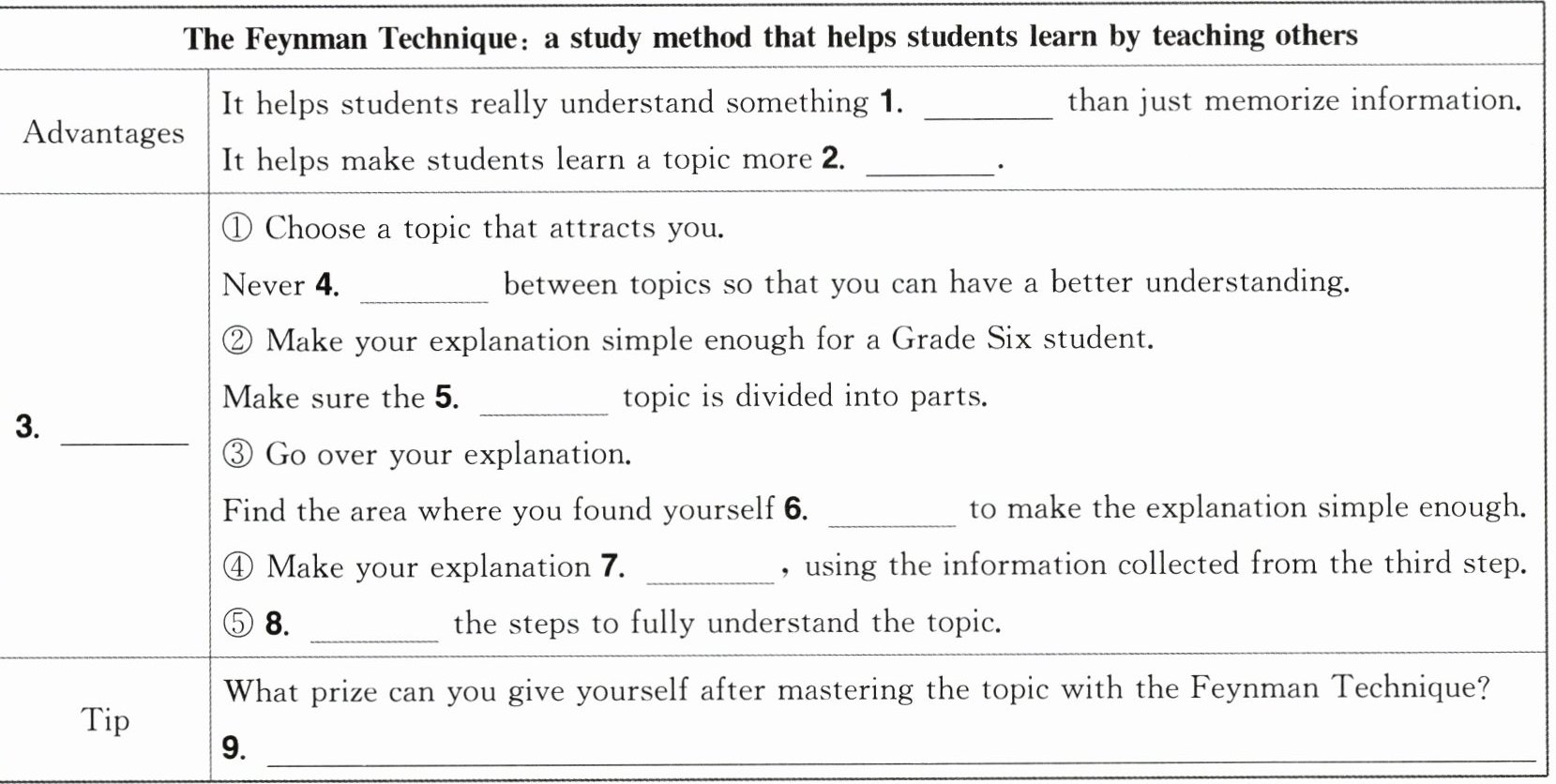
[2025 南京模拟改编]The Feynman Technique was developed by Nobel Prize-winning physicist Richard Feynman. It's a study method that helps students learn by teaching others.
The Feynman Technique has been one of the most effective(有效的) study methods for many years. For one thing, it helps students really understand something instead of just memorizing information. Plus, unlike traditional study methods like rereading textbooks or reviewing notes, it pushes students to take a more active part in the learning process.
If you want to use the Feynman Technique to study better, follow these steps.
To begin with, choose a topic you want to learn about, including sub-topics. If you don't stick to one topic, you'll end up jumping between topics without developing a deeper understanding of any of them.
The second step is the heart of the Feynman Technique: make the explanation(解释) easy enough to be understood by a sixth-grade student. This needs you to help the child understand by using the easiest and clearest language. This step helps divide topics that are difficult to understand into their most basic parts.
Next, review your explanation and try to find any area where you felt that you couldn't explain the topic in a simple way. When possible, it can be very helpful to get advice from someone whose understanding is similar to that of a sixth-grader.
The fourth step is to improve your explanation, using the information collected from the third step.
Finally, follow the steps over and over again. The Feynman Technique works best with repetition, and that is why going through all the prior(先前的) steps just once is usually not enough to fully understand the topic.
Once you've learned the topic well, it's time to give yourself a prize. Perhaps, like me, enjoy a nice cup of coffee.