四、阅读理解
Since the Zhou Dynasty, a complete etiquette system has been set. Today, many of these rules are not as strict as before. However, some are still followed on important occasions and are thought as examples of good manners.
Walking Etiquette
①
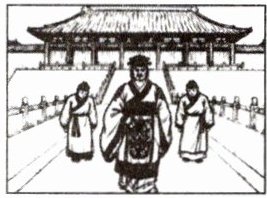
In ancient China, while walking with someone with higher status or an old person, one should lower head, and walk a little bit behind them. If three people walk together, the elder or a teacher should be in the middle. One should bow down and walk fast using smaller steps when passing by an elder or a teacher.
Sitting Etiquette and Seating Rules
②
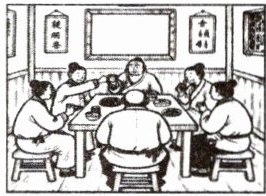
Everyone should be sitting in a proper position at dining tables. It is based on their titles, ranks, or age. If someone doesn't know the exact position, they should wait and follow the host's lead. The best seat is the one that faces the south or the door. Hosts usually sit next to the door.
Bow and Fist-and-Palm Salute
③
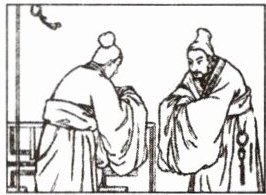
Bow, known as zuoyi in Chinese, means having their hands folded in front in different ways. Today, however, the simplest zuoyi is good enough, as well as nodding, smiling, and handshaking.
④
The Fist-and-Palm Salute, is another type of zuoyi, with the right hand's fist covered by the left hand. It first appeared in the army when people holding weapons wanted to show respect for others.
So,
people always used the left hand to cover the right hand that held weapons.
(
A
) 1. In ancient China, which place should your teacher be when walking with you and your classmate?
A. In the middle. B. On the left. C. On the right. D. At the back.
(
B
) 2. Where can we put the sentence "The seating order is still widely used in family and business dinners." in the passage?
A. ① B. ② C. ③ D. ④
(
B
) 3. Which of the following pictures correctly shows "the Fist-and-Palm Salute"?

A. B. C. D.
(
C
) 4. Why is the underlined sentence included in the last paragraph?
A. To give an example. B. To set the order.
C. To add more information. D. To show a result.
(
A
) 5. What may the writer talk about in the following paragraph?
A. Another kind of Chinese etiquette.
B. Another kind of Western etiquette.
C. Differences among the three kinds of etiquette.
D. Differences between Chinese and Western etiquette.