二、阅读理解。(共15小题;每小题2分,满分30分)
请认真阅读下列短文,从短文后各题所给的A、B、C、D四个选项中,选出最佳选项。
A
With the rapid development of technology, collecting online content is no longer limited by time or space. Many young people have developed the habit of digital hoarding(数字囤积). They save a lot of digital content and seldom delete(删除) it. Recent research shows that among 1,001 young Chinese people surveyed, 82% of them share this habit.
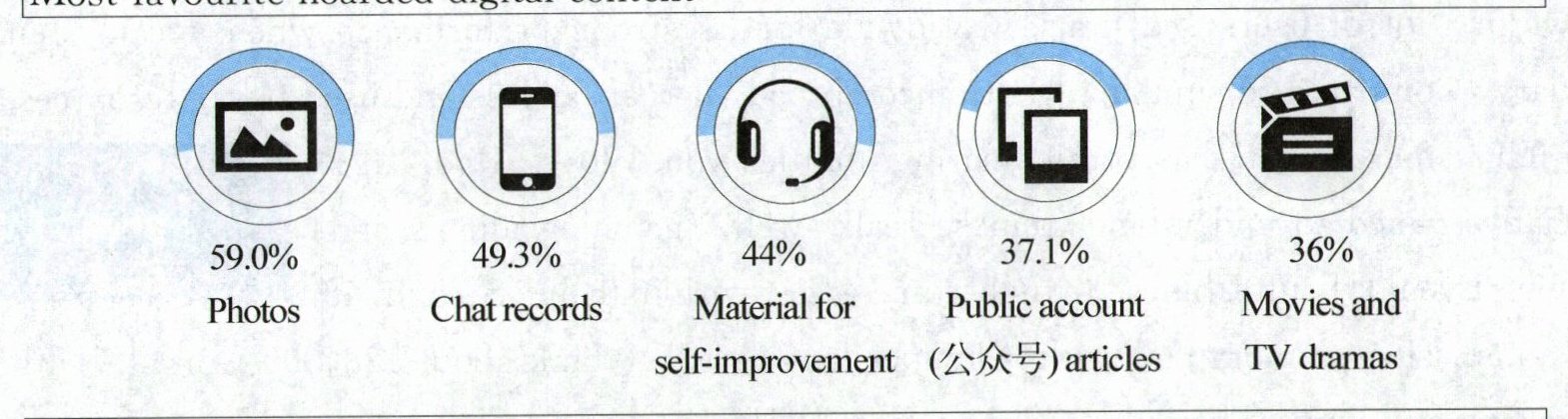
Most favourite hoarded digital content
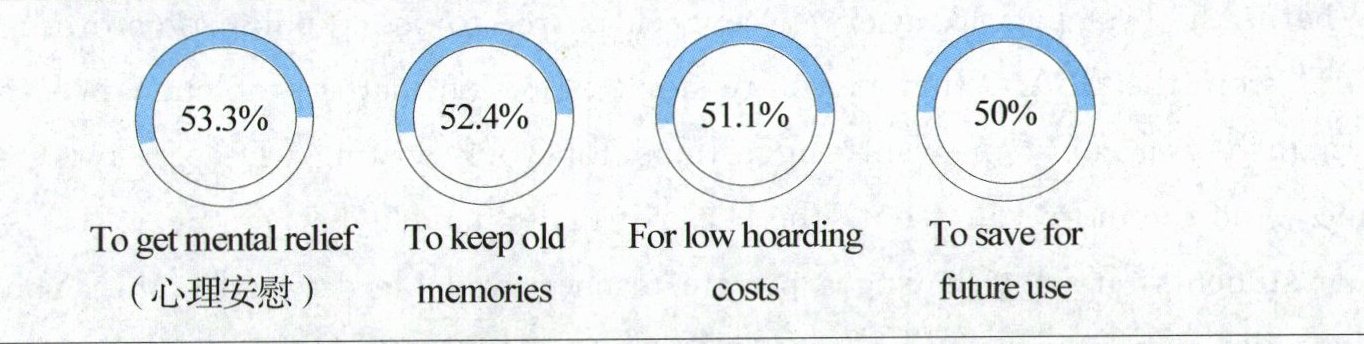
Top 4 reasons why they hoard digital content
Advice for managing with digital hoarding
• Collect content that can be used in the near future.
• Put content into clear groups.
• Delete old files(文件) often.
• Set limits on favourites to avoid blind hoarding.
(
A
)11. Which of the following do young Chinese people hoard most?
A. Photos.
B. Movies and TV dramas.
C. Material for self-improvement.
D. Public account articles.
(
B
)12. What is NOT mentioned as a reason for digital hoarding?
A. To keep old memories.
B. To impress friends.
C. For low storage costs.
D. For mental relief.
(
C
)13.
新考法 写作意图 What is the main purpose of the text?
A. To say that hoarding is not right.
B. To share storage tools with readers.
C. To discuss hoarding problems and solutions.
D. To encourage the habit of more digital hoarding.