阅读下面的短文,从短文后各题所给的A、B、C、D四个选项中,选出最佳选项。
One winter morning, Tapiwa Chiwewe was driving to work in Johannesburg, South Africa. He noticed a haze(薄雾) hanging over the city and it didn’t take long for him to realize that it was the pollution we suffered.
At that moment, Chiwewe felt it necessary to do something about
it, but he didn’t know what. He was a computer engineer and knew little about environmental science.
He first did research on air pollution and found that it is the world’s biggest environmental health risk. He decided to work on it in a cooperative(合作的) way with
scientists, officials, and engineers who helped him develop a deeper understanding of the situation, as well as an idea to improve it.
Through years of work, Chiwewe and his co-workers from South Africa and China created an online air-quality decision support system. Based on historical and real-time data, the system can correctly predict air pollution and air quality, which can help people make better decisions about their daily movements, as well as help officials better manage their operations.
Chiwewe learnt an important lesson—“a lesson we all need to take to heart if we are to work towards a better future. Even if you’re not an expert in a particular field, your outside expertise may hold the key to solving problems within that field,” he said.
What if Chiwewe hadn’t worried about researching the problem and done something about it? What if he had just hoped that someone, somewhere, was taking care of the matter? As Chiwewe said, “Why not just go ahead and deal with the problem as well as you can in your own way? You may be pleasantly surprised.”
(
) 1. What does the underlined word “it” in paragraph 2 refer to?
A. The environmental science.
B. The air pollution in the city.
C. The haze hanging over the city.
D. The research on air pollution.
(
) 2. What is the main idea of the last paragraph?
A. There is always something new to learn.
B. We should always wait for others to help us.
C. Taking action yourself is better than waiting.
D. Doing research first helps experts solve problems.
(
) 3. How is the passage organized? (①=paragraph 1, ②=paragraph 2...)
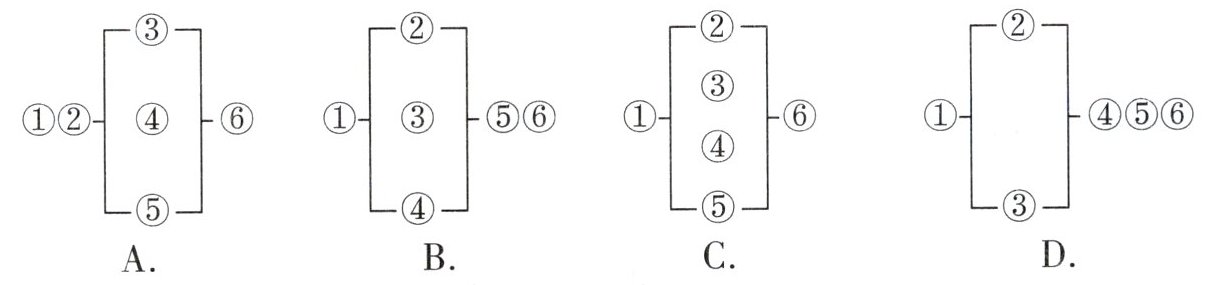
(
) 4. What’s the passage mainly about?
A. Chiwewe’s special job journey.
B. Using your skills to solve problems.
C. The process of creating a system.
D. Taking action now.