一、认读下列短语和句子。
1. watch TV
2. visit grandparents
3. play Chinese chess
4. play the piano
5. go to the cinema
6. chat on the internet
7. I also like spending time with my family.
8. Wonderful! We all have fun at weekends.
答案:能够准确、流利地读出所有短语和句子,熟记对应的中文含义,就完成了本次认读任务。
解析:
本题是译林版五年级上册英语的基础认读练习,围绕周末活动的相关表达展开,要注意两个固定搭配规则:①棋类活动前的play后面不加定冠词the,所以“下中国象棋”的表达是play Chinese chess;②乐器类名词前的play后面要加定冠词the,所以“弹钢琴”的表达是play the piano。各内容对应的中文释义如下:
1. 看电视
2. 拜访祖父母/外祖父母
3. 下中国象棋
4. 弹钢琴
5. 去电影院、看电影
6. 网上聊天
7. 我也喜欢和我的家人共度时光。
8. 太棒了!我们所有人周末都玩得很开心。
二、运用本单元句型,互相询问周末活动。
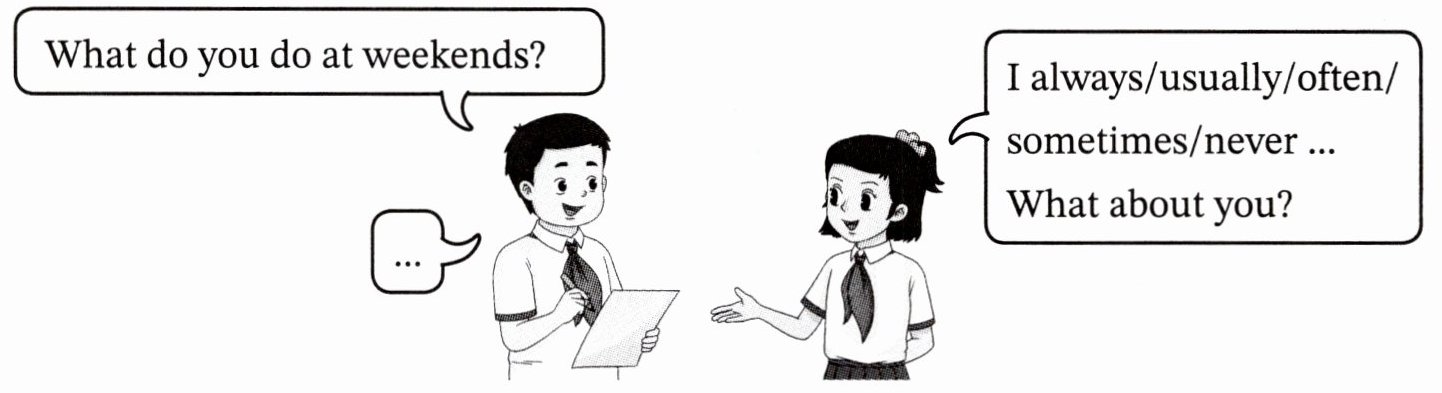
What do you do at weekends?
I always/usually/often/sometimes/never ...
What about you?
...
答案:参考示例对话:
A: What do you do at weekends?
B: I often visit my grandparents with my parents. What about you?
A: I usually finish my homework on Saturday morning, and I sometimes go to the cinema with my cousin. I never stay up late at weekends.
(答案不唯一,合理即可)
解析:
本题是情景交际练习,要求运用本单元询问周末活动的核心句型,搭配频度副词always/usually/often/sometimes/never来描述自己的周末日常,对话表达符合五年级上册已学的英语词汇范围、逻辑通顺即可。
参考完整对话示例:
A: What do you do at weekends?
B: I often visit my grandparents with my parents. What about you?
A: I usually finish my homework on Saturday morning, and I sometimes go to the cinema with my cousin. I never stay up late at weekends.