B 核心素养 革命文化
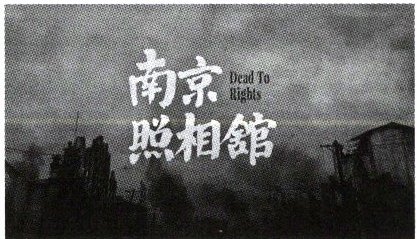
Dead To Rights
As the world marks(纪念) the 80th anniversary of the victory over fascism, a moving Chinese film, Dead To Rights, gives us a special look at history. Unlike traditional war movies that focus on battlefields, it tells a story through a small photo studio during the 1937 Nanjing Massacre.
In the fallen city, ordinary people find safety in Jixiang Photo Studio. One of them is a postman, played by Liu Haoran. He pretends
to be an apprentice. Forced to develop films for Japanese soldiers, he accidentally finds photos that show their cruel crimes. At first, they
fight just to stay alive—but soon, this becomes a mission(任务) to guard the truth. They promise to pass on this solid evidence, no matter what happens.
Dead To Rights tries something new with its “small people witnessing big history” story. It turns national pain into a shared memory on screen. Its success comes not only from careful technical work. Realistic sets, the local dialect(方言) and other small but meaningful details all play a part. More importantly, it connects with people’s feelings. When the studio owner Lao Jin shouts “Every inch of our beautiful land must never be given up”, or when modern Nanjing streets are intercut(镜头切换) with wartime ruins, viewers see not just history coming to life like a photo, but a symbol of a strong, unbroken civilization(文明).
The film does not show big war scenes. Instead, it uses the photo studio to show how ordinary people wake up and fight back in the big waves of history. It makes audiences feel deeply the great sacrifices(牺牲) our ancestors made to protect truth and dignity. It is a serious look back and a deep thought on history. This is also proof of why it is called Dead To Rights—the solid evidence(证据), kept safe by courage, always reminds us to remember the past and cherish(珍惜) today’s peace.
(
C
)29. Why does the postman pretend to be an apprentice?
A. To learn photo-taking skills.
B. To work for Japanese soldiers.
C. To find a safe place.
D. To take photos of crimes.
(
A
)30. The phrase “fight just to stay alive” in Paragraph 2 means the people
.
A. simply want to live through the hard time
B. only try to win a big fight
C. plan to take back their city
D. hope to become brave fighters
(
C
)31. What helps Dead To Rights succeed according to the passage?
A. Only realistic sets and local dialects.
B. Big war scenes and famous actors.
C. Technical work and emotional connection.
D. Sad stories and old photos.
(
B
)32. When modern Nanjing streets are intercut with wartime ruins, viewers can feel
.
A. how fast Nanjing has changed
B. the unbroken spirit of the civilization
C. why the war started
D. what life was like in the past