六、阅读表达。(10 分)
新素养 技术应用 A country music song made with the help of AI reached the top for the first time in November.
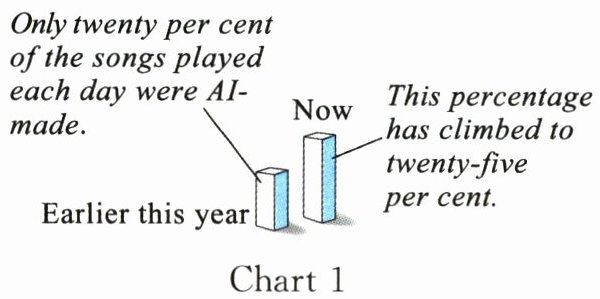
An artist named Breaking Rust, who is not a real person, made the AI song *Walk My Walk*. Many experts think that AI created the singer's voice and images. Several AI tools said this computer programme completely made the song. This shows that AI is becoming a strong new player in the music world. More AI songs are appearing on streaming platforms like Deezer.
However, not everyone is happy about this change. In a recent survey by Ipsos, 9,000 people listened to both AI-made and human-made music. It showed that 97 per cent could not tell the difference between AI-made and human-made songs. The survey also asked about their feelings on AI in music. Over half of them believed AI would lead to songs that are not so good, and almost two-thirds worried that it would be bad for human creativity.
The CEO of Deezer said the survey showed why people care about who creates music and how it's made. As AI develops, musicians, listeners, and companies will likely need to work together.

Three groups can set rules together. This way, we can enjoy the benefits of technology while also protecting human creativity and the cultural value of music.
1. Who made the AI song *Walk My Walk*?
Breaking Rust./An artist named Breaking Rust, who is not a real person.
2. What percentage of songs played each day are AI-made now in the Chart 1 above?
Twenty-five per cent.
3. What is people's general attitude towards AI-generated music based on the survey?
They are not satisfied with AI-generated music and worried about its negative influence on human creativity.
4. Why should listeners know where music comes from?
To support their favourite human artists.
5. 新考法 开放性设问 Which do you prefer, AI-made songs or human-made songs? Why?
I prefer human-made songs because they carry real emotions, stories, and unique creativity that AI cannot fully copy.(答案不唯一,言之有理即可)
解析:
【分析】
做这篇阅读表达题时,首先快速通读全文,把握文章核心主题是AI生成音乐的发展现状以及大众对该类音乐的态度,之后逐题带着题干关键词回原文定位匹配信息:第1题直接定位歌曲名《Walk My Walk》就能找到对应的创作主体;第2题结合题干的图表信息直接提取对应占比数据即可;第3题定位到调查相关的段落,将分散的大众态度信息整合归纳就能得到结论;第4题结合文章保护人类创作者、维护音乐人文价值的逻辑推导答案;第5道开放题只要明确给出偏好,理由表述通顺符合逻辑即可,无需拘泥唯一答案。
【解析】
1. 回原文第二段第一句"An artist named Breaking Rust, who is not a real person, made the AI song *Walk My Walk*",直接提取对应信息即可得到答案。
2. 结合题干给出的图表信息,直接提取对应AI生成音乐的日播放占比数据。
3. 定位到文章第三段的调查结果:超过半数受访者认为AI产出的歌曲质量不佳,近三分之二的人担心它会损害人类创造力,将两部分信息整合就能得到大众的普遍态度。
4. 结合文章提到的要保护人类创作者、维护音乐人文价值的相关表述,可推导出听众了解音乐来源的目的是支持喜爱的人类创作者。
5. 开放性设问,首先明确给出自己的选择,再补充合理的理由,表述通顺无语法错误、逻辑自洽即可。
【答案】
1. Breaking Rust./An artist named Breaking Rust, who is not a real person.
2. Twenty-five per cent.
3. They are not satisfied with AI-generated music and worried about its negative influence on human creativity.
4. To support their favourite human artists.
5. I prefer human-made songs because they carry real emotions, stories, and unique creativity that AI cannot fully copy.(答案不唯一,言之有理即可)
【知识点】
阅读细节定位;文意归纳概括;英语观点表达
【点评】
本题结合当下AI技术应用于音乐领域的热点情境,考点覆盖了细节信息提取、内容归纳、开放表达多个维度,既考察学生快速从文本中锁定关键信息的阅读能力,也引导学生辩证思考新技术对文化领域的影响,开放设问设置灵活,不会限制学生的发散思维。
【难度系数】
0.7