四、阅读理解。
新素养 文化意识 Do you know anyone born in the
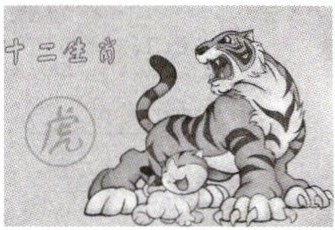
Year of the Tiger? What's their personality like? Are they brave, strong and determined? If so, then they are a typical "tiger".
In Chinese culture, tigers are seen as the king of all animals. They stand for power, energy and protection. Tigers are seen as fearless animals, so that's why in China you can see pictures of tigers on the walls of houses and temples to ward off(抵御) danger and disasters.
Tigers have an important cultural meaning not just in China, but across Asia where they live in the wild. For example, in South Korea, the animal is a symbol of justice, humanity and righteousness(正义) in local folk tales. Both the 1986 Seoul Asian Games and the 1988 Seoul Summer Olympics used Hodori, a friendly cartoon tiger, as the mascot. A tiger is also on the logo of the South Korea national soccer team.
In the West, tigers are also seen as powerful animals. And we often use "tiger" in English. If we say someone "works like a tiger", we mean he or she works hard. If you want someone to calm down, you can say to them "easy, tiger". Another famous phrase is "eye of the tiger", which means having strength. There are also some other phrases about tigers, such as "a tiger can't change its stripes" "paper tiger" and "have a tiger by the tail".
1. What's a typical "tiger" like according to the passage?
A. Smart and brave.
B. Brave and strong.
C. Strong and outgoing.
D. Clever and friendly.
2. Why can people see pictures of tigers on the walls of houses and temples in China?
A. Because tigers live in the wild in Asia.
B. Because tigers are used in English phrases.
C. Because tigers are regarded as fearless animals.
D. Because tigers are used as the mascots both in the Asian Games and in the Olympics.
3. If we want someone to calm down, we can use "
easy, tiger
".
A. easy, tiger
B. work like a tiger
C. eye of the tiger
D. a tiger can't change its stripes
4. What's the best title of the passage?
A. Tigers in different cultures
B. Tigers in different phrases
C. Tigers—the king of all animals
D. Tigers—the cultural symbol in China
解析:
【分析】
这是一篇围绕老虎文化内涵展开的阅读理解题,解题时可以采用带着题干关键词回原文定位的思路逐步推导:首先针对前3道细节题,找到每道题对应的原文段落,匹配原文描述和选项就能得到答案;最后一道主旨题需要梳理全文的行文逻辑,排除只覆盖局部内容的片面选项,选出可以概括全文的最佳标题即可。
【解析】
1. 定位原文第一段内容:"Are they brave, strong and determined? If so, then they are a typical 'tiger'.",可知典型的属虎特质是勇敢、强壮且有决心,对应B选项,其余选项的相关描述在原文中没有出现,直接排除。
2. 定位原文第二段末尾的因果句:"Tigers are seen as fearless animals, so that's why in China you can see pictures of tigers on the walls of houses and temples to ward off danger and disasters.",可知该现象的原因是老虎被看作无所畏惧的动物,对应C选项,其余选项和题干不存在因果对应关系,排除。
3. 定位原文最后一段内容:"If you want someone to calm down, you can say to them 'easy, tiger'.",可知劝人冷静可以使用表达"easy, tiger",对应A选项。
4. 全文分别介绍了中国、韩国等亚洲国家、西方不同文化中老虎的象征意义,B选项只覆盖末尾英文习语的局部内容,C、D选项只对应中国文化的部分描述,都过于片面,只有A选项可以完整概括全文内容。
【答案】
1. B 2. C 3. A 4. A
【知识点】
阅读细节定位,英语文化常识,主旨归纳
【点评】
本题结合十二生肖的中国传统文化背景,拓展了不同国家和地区的老虎相关文化知识,既考察学生的信息查找、阅读理解能力,也渗透了文化差异相关的素养引导,绝大多数题目都可以通过原文直接定位得出结论,整体难度不高。
【难度系数】
0.8