Ⅲ. Read and write. 按要求写单词。
1. 吃早饭(英语)
2. 早饭后(英语)
3. before lunch(汉语)
4. tooth(复数)
5. 五次(英语)
6. brush(第三人称单数)
7. 起床(英语)
8. because(对应疑问词)
“before”表示“在……之前(表示时间),对应词为“after”(在……之后),例如:before three o'clock 在三点钟之前;“before”还可以表示方位,意为“在……前面”,例如:Danny sits before Jenny. 丹尼坐在詹妮的前面。

答案:
1. have breakfast
2. after breakfast
3. 午饭前
4. teeth
5. five times
6. brushes
7. get up
8. why
解析:
1. "吃早饭" 翻译为英语是 "have breakfast"。
2. "早饭后" 翻译为英语是 "after breakfast"。
3. "before lunch" 翻译为汉语是 "午饭前"。
4. "tooth" 的复数形式是 "teeth"。
5. "五次" 翻译为英语是 "five times"。
6. "brush" 的第三人称单数形式是 "brushes"。
7. "起床" 翻译为英语是 "get up"。
8. "because" 对应的疑问词是 "why"。
(
) 1.I go to school five
a week, from Monday to Friday.
A.times
B.time
C.o'clock
答案:A
解析:
根据句意“我一周上学五次”,“five”后应接可数名词复数形式,“time”作为“次数”讲时为可数名词,“five times”表示“五次”,符合题意。“o'clock”表示“……点钟”,不符合语境。
(
) 2.Before breakfast, I
my hands. Then I brush my teeth.
A.washing
B.washes
C.wash
答案:C
解析:
本题根据主谓一致原则,主语I为第一人称,在一般现在时中,谓语动词用原形。A选项washing是现在分词形式,B选项washes是第三人称单数形式,均不符合要求,C选项wash是动词原形,符合题意。
(
) 3.This baby eats too much candy. That's
for his teeth.
A.good
B.bad
C.kind
答案:B
解析:
题目中提到“This baby eats too much candy”(这个婴儿吃了太多糖),根据常识和本课关于保护牙齿的主题内容,吃太多糖对牙齿是有害的。选项A“good”表示“好的”,选项B“bad”表示“有害的、不好的”,选项C“kind”表示“友好的”,因此选择B。
(
) 4.She gets up
7:00 in the morning.
A.in
B.on
C.at
答案:C
解析:
在表示时间时,"at"用于具体的时间点,"in"用于年、月、季节等较长的时间段,"on"用于具体某一天或具体某一天的上午、下午或晚上。题目中"7:00"是具体的时间点,所以前面应该用"at"。
(
) 5.First she put on her coat,
she put on her hat and then she went out.
A.but
B.so
C.next
答案:C
解析:
根据句子中“First”(首先)和“then”(然后)可知,这里描述的是一系列连续的动作,中间需要一个表示顺序的词。选项A“but”表示转折,B“so”表示结果,C“next”表示接下来。此处应选“next”,符合动作的先后顺序。
Ⅴ. Read and order. 读一读,按正确的顺序排列图片。
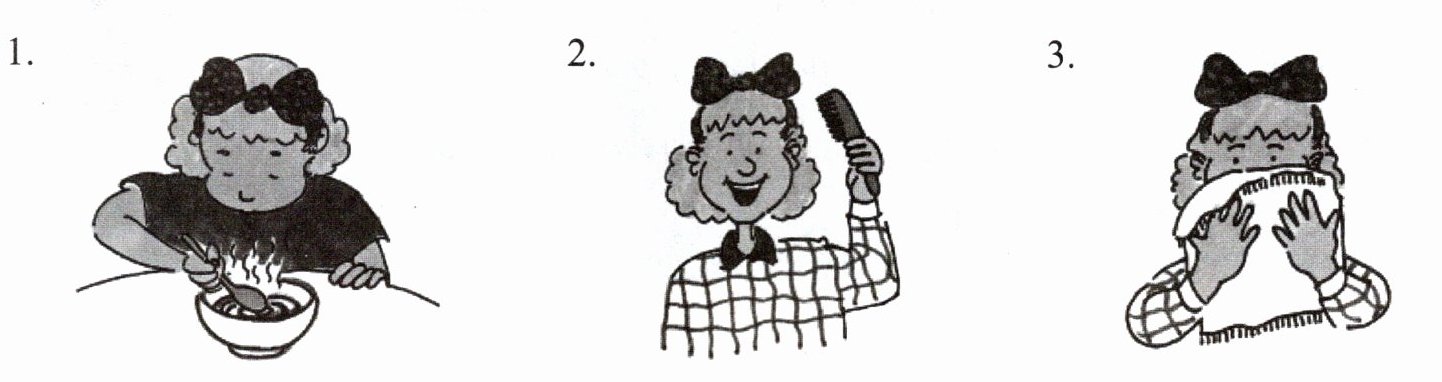
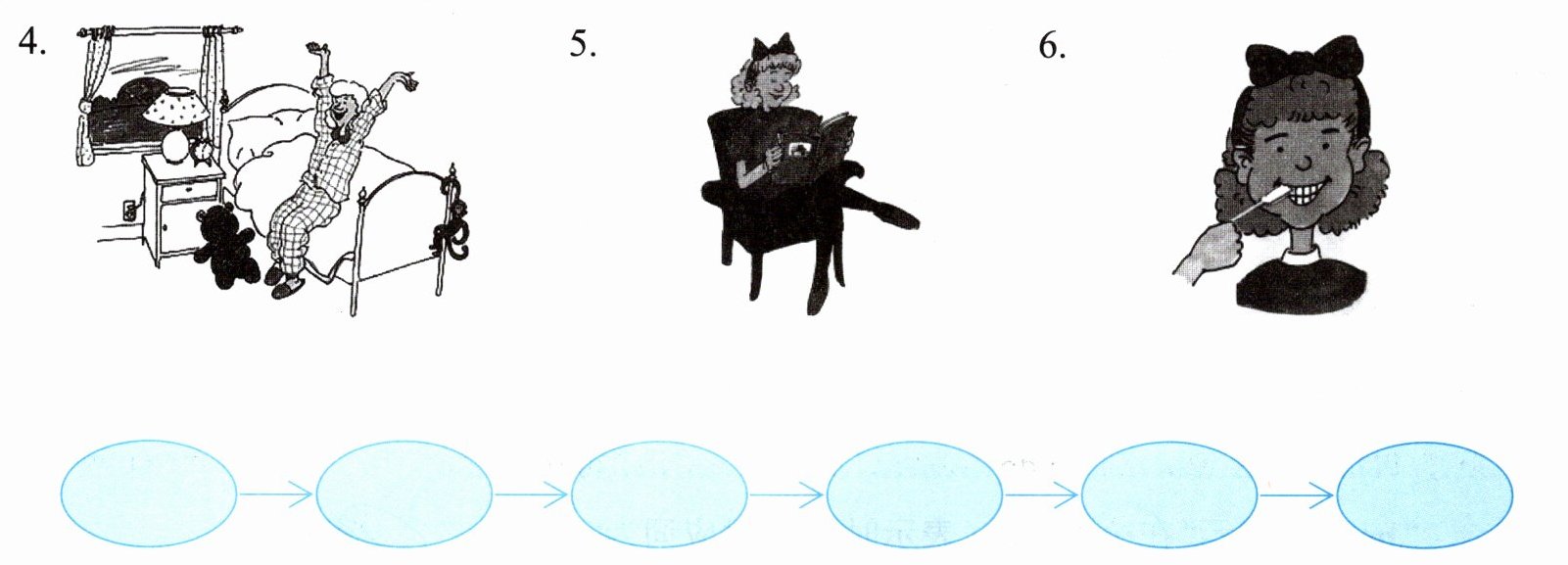
1.
2.
3.
4.
5.
6.
It's Sunday today. Jenny doesn't go to school. Jenny gets up at seven o'clock. She washes her face after she brushes her hair. Next she brushes her teeth. At seven thirty, she has breakfast. Then she reads books in the chair.
答案:4→2→3→6→1→5