四、阅读理解。
新素养 文化意识 ① In the world, what people in different places are supposed to do isn't always the same. Something that seems common to you may seem strange to others. Here are some surprising examples.
② People in Malaysia use their thumb(拇指) to point. In many cultures, people probably think that pointing with a finger isn't very nice. However, in some countries like Indonesia and Malaysia, it is considered much more polite to point with the thumb.
③ Nigerians kneel(跪下) when greeting others. A group of people in Nigeria takes greeting manners seriously, especially with their elders. When an adult comes, it is common for young people to greet him or her by dropping to their knees. Women kneel, and men prostrate(拜倒) themselves. This traditional custom is a sign of respect for the elders.
④ The Japanese enjoy
slurping. Most cultures have rules about table manners. In western countries, making noise while eating food is usually considered impolite. However, in Japan, making slurping sounds while eating noodles can be accepted. This probably has something to do with the way noodles are eaten. The Japanese slurp up their noodles without winding them around an eating tool. This way of noodle eating is naturally noisier. Making slurping sounds when eating noodles in Japan shows that you're enjoying them.
⑤ Using your left hand might be impolite. In some countries, the use of the left hand for eating or other activities is considered impolite. People in these countries use their left hands for cleaning themselves after using the toilet, so the left hand is considered dirty. This custom is known in much of the Middle East, Sri Lanka, and parts of Africa.
1. In which country or countries is it more polite to point with the thumb?
A. Only Malaysia.
B. Indonesia and Malaysia.
C. All Asian countries.
D. Western countries.
2. What does the underlined word "slurping" mean in English?
A. Keeping quiet.
B. Talking loudly.
C. Being on time.
D. Eating or drinking noisily.
3. Why is the left hand considered dirty in some countries?
A. Because it is used less frequently than the right hand.
B. Because it is used for handling unclean objects in daily life.
C. Because it is used for cleaning oneself after using the toilet.
D. Because it is believed to have more bacteria naturally.
4. 新考法 篇章结构 Which of the following can show the structure of the passage?
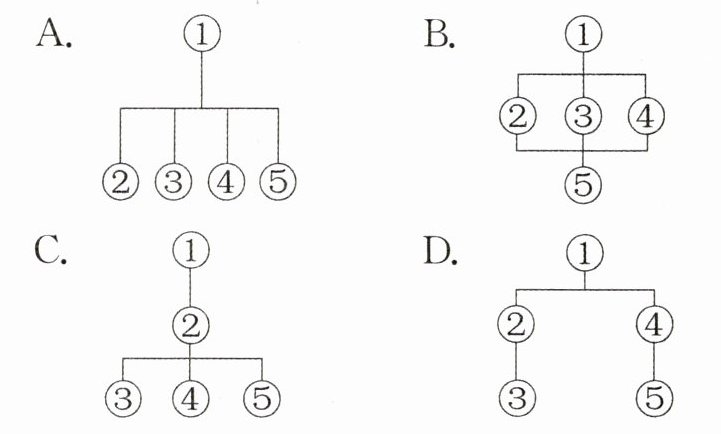
5. What's the purpose of the passage?
A. To show how to learn about cultural customs.
B. To introduce some surprising customs to readers.
C. To explain the importance of greeting manners.
D. To teach readers how to eat with proper table manners.