三、(2025·镇江市润州区二模)任务型阅读。
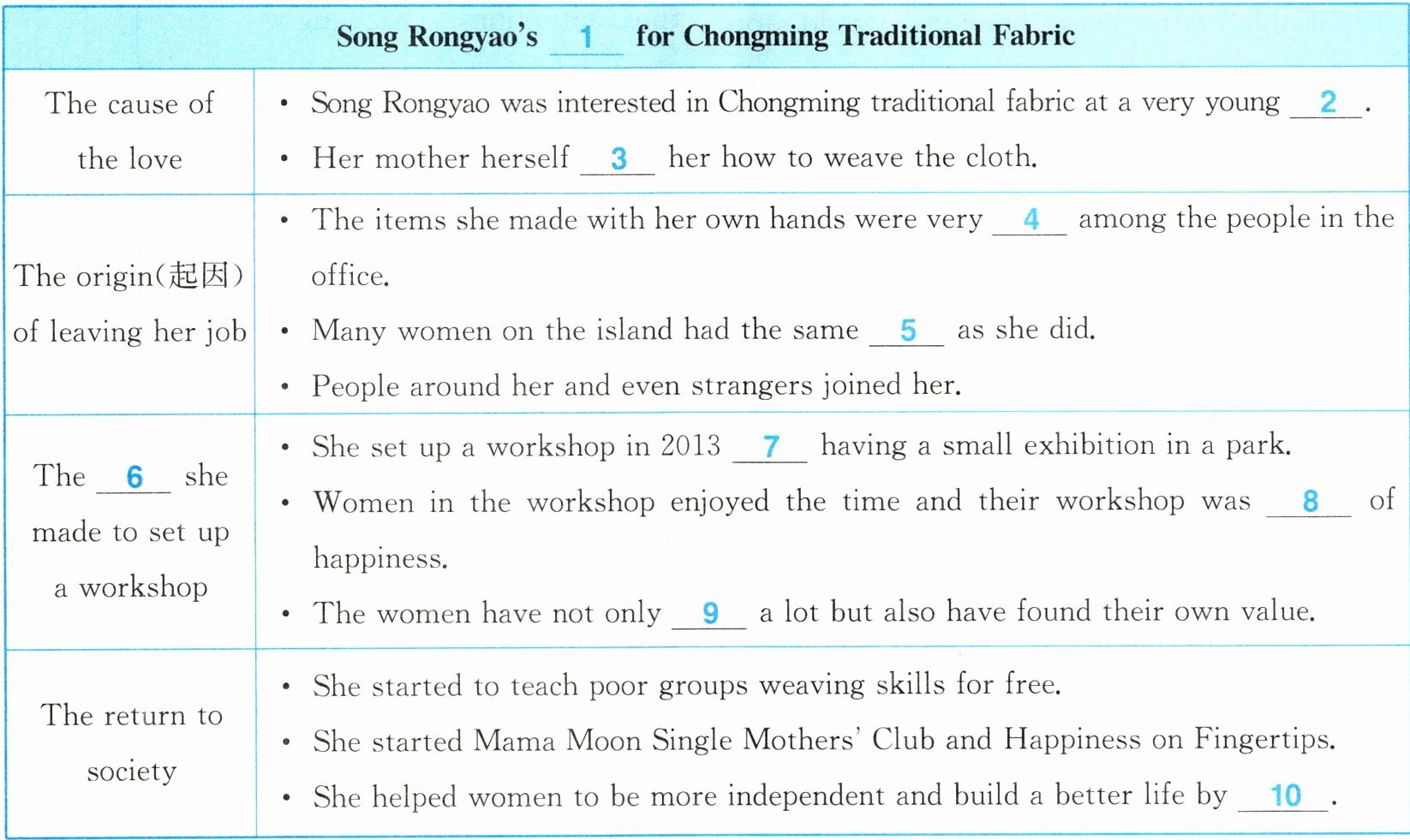
Song Rongyao, from Shanghai's Chongming Island, used to have a steady(稳定的) job. Four years ago, she finally decided to give up her job. She did it not because she hated her job, but because her job was getting in the way of her true love. She has been interested in Chongming traditional fabric(织物), made from cotton and coloured with plant dyes(染料) since she was a girl. She learnt how to weave(织) the cloth from her mother.
Before leaving her job, Song had been using her after - work time to design, sew and weave everything with her own hands. At first, the small items she made became a hit in the office. “When the things you make are liked by others, you'll find yourself enjoying doing more and more,” Song said. Later, her name spread and she soon found that many women on the island were into handicrafts(手工艺品) like her. Her childhood playmates, friends and even strangers joined her.
A turning point came when Song and her team were having a small exhibition in a park. A crowd of people were around them to see what they were doing. Not long after that, she decided to make Chongming Traditional Fabric official. Cotton - Tree Flowers Bloom Workshop was set up in 2013. And her workshop became a place filled with happiness. By designing and making all kinds of cloth items and selling them, the women have had a sense of achievement and have also found their own value.
Soon, more and more women joined. Besides bringing tourists to their workshop to watch the process of making Chongming traditional fabric, Song started to give free classes to poor groups. They started Mama Moon Single Mothers' Club, a training programme for single mothers. They started Happiness on Fingertips, another programme for people with disabilities.
Running the club has enabled Song who was very shy to do something she could never do before, such as communicating with all kinds of people. Song considers the workshop as a symbol of independence and she hopes it will help more women to fight for a better life on their own.
解析:
翻译:
三、(2025·镇江市润州区二模)任务型阅读。
宋荣瑶来自上海崇明岛,她曾有一份稳定的工作。四年前,她最终决定辞去工作。她这么做不是因为讨厌自己的工作,而是因为工作妨碍了她的真爱。从儿时起,她就对崇明传统织物感兴趣,这种织物由棉花制成,并用植物染料染色。她从母亲那里学会了如何织布。
在辞职前,宋荣瑶一直利用业余时间亲手设计、缝纫和编织各种东西。起初,她制作的小物件在办公室里很受欢迎。“当你做的东西被别人喜欢时,你会发现自己越来越喜欢做这件事,”宋荣瑶说。后来,她的名声传开了,她很快发现岛上很多女人都和她一样喜欢手工艺品。她儿时的玩伴、朋友甚至陌生人都加入了她的行列。
当宋荣瑶和她的团队在一个公园里举办小型展览时,一个转折点出现了。一群人围在他们身边,看他们在做什么。那之后不久,她决定让崇明传统织物走向正轨。“棉树花开工坊”于2013年成立。她的工坊成了一个充满欢乐的地方。通过设计和制作各种布艺品并出售,这些女人有了成就感,也找到了自己的价值。
很快,越来越多的女人加入进来。除了带游客到她们的工坊观看崇明传统织物的制作过程,宋荣瑶还开始为贫困群体免费授课。她们创办了“月亮妈妈单亲妈妈俱乐部”,这是一个针对单亲妈妈的培训项目。她们还创办了“指尖上的幸福”项目,这是另一个针对残疾人的项目。
运营这个俱乐部让非常害羞的宋荣瑶能够做一些她以前从未做过的事情,比如和各种各样的人交流。宋荣瑶认为这个工坊是独立的象征,她希望它能帮助更多的女人靠自己为更好的生活而奋斗。