五、(2025·扬州市学校期中)阅读理解。
Everyone loves receiving gifts, and across cultures, presents are a way to show care and love. However, traditions are not the same in every country.
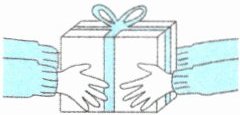
As a European living in China, I’ve seen some interesting differences. For example, while fruit and milk are common gifts here, in my culture, they might be a better choice when you are visiting someone in hospital.
When you get invited to a dinner party, a bottle of fine wine is also a good gift. Still, it’s best to check if your hosts drink alcohol(酒).
Many Europeans will typically open their presents right away, except in places like Germany. It’s also important to take off the price tag(标签).
What if you don’t like your gift? In Spain, you still need to say you love the gift to avoid hurting the other person’s feelings. But if they remember to leave the receipt(收据)inside the gift, which is a very common practice in Spain, you can just exchange it for something else.
Re - gifting(礼物转送)is another good idea, as long as the present looks new. Jennifer Molski from Chicago has turned re - gifting into a nice project, collecting gifts people didn’t want for those in need, CBS News reported.
How the present looks is also important. However, by using wrapping paper(包装纸)for every present we buy, we produce a lot of waste. Germans value high - quality wrapping paper, but many are now choosing newspaper or maps to help protect the environment.
Do Europeans give money as gifts? Yes. Polish couples, for example, often request cash(现金)at weddings to cover the cost of the venue(场地)and meals.
Finally, remember: It’s the thought that counts, not the size or the cost of the gift.
1. What might be a good gift to take to someone in hospital in the author’s culture?
A. Books.
B. Fruit.
C. Some cash.
D. A bottle of fine wine.
2. Why do some Spanish people leave the receipt inside presents?
A. To show the price of the gift.
B. To make it easier to re - gift the item.
C. To show respect for the receiver.
D. To allow the receiver to exchange the gift.
3. How can people deal with the gift they don’t like according to Paragraph 6?
A. They can sell it.
B. They can return it to the giver.
C. They can give it to someone else.
D. They can take it back to the store.
4. What is the passage mainly about?
A. The gift - giving culture in different countries.
B. Recent changes in gift - giving in Europe.
C. Why we should re - gift unwanted presents.
D. How people in Spain give and receive gifts.